
In the first part of this post, I gave the basic intuition behind Bayesian belief networks (or just Bayesian networks) — what they are, what they’re used for, and how information is exchanged between their nodes.
In this post, I’m going to show the math underlying everything I talked about in the previous one. It’s going to be a bit more technical, but I’m going to try to give the intuition behind the relevant equations.
If you stick to the end, I promise you’ll get a much deeper understanding of Bayesian networks. To the point of actually being able to use them for real-world calculations.
 In my
In my 

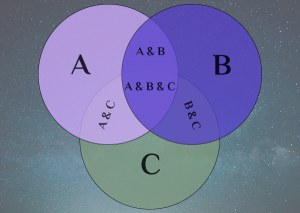 You can think of probabilities as
  Throughout history, we have come up with better and more accurate ways to measure physical quantities like time, length, mass, and temperature. This has been crucial for our scientific and technological development.